
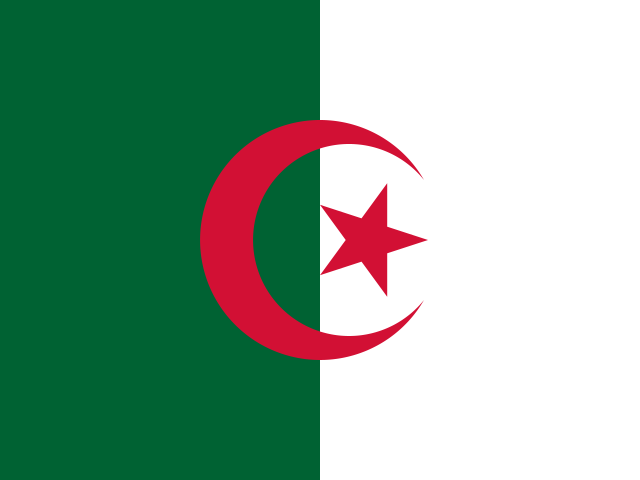
 Algeria
Country basics
Algeria is the largest country in Africa by area, on the Mediterranean with the Sahara to its south.
Algeria is a republic with Algiers as its capital and Arabic and Tamazight as official languages, with French widely used. The dinar is the currency, and natural gas and crude oil piped to Europe supply the majority of export earnings.
Official name
People's Democratic Republic of AlgeriaRegion
Africa · Northern AfricaGovernment
Unitary semi-presidential republicTime zonesCheck the offset for your own city
UTC+01:00Driving side
RightPhone code
+213Currency
Algerian dinar (DZD, د.ج)Member of
Arab League; UN; African Union; OPECWebsite
https://www.el-mouradia.dzFaith and language
Religions
Muslim (official; predominantly Sunni) 99%, other (includes Christian, Jewish, Ahmadi Muslim, Shia Muslim, Ibadi Muslim) <1%Languages
ArabicPeople and cities
Population
47.4 million (current)Median ageHalf the population is younger than this
29.3 years (2025)Living in cities
75.3% (2023)Largest cities
Algiers (capital) 2.902 million · Oran 936,000Money and cost of living
Exchange rateYearly average; check today’s rate before you budget
134 Algerian dinars (DZD) per US dollar (2024)Income per personGDP per person, adjusted for local prices (2021 dollars)
$15,400 (2024)InflationHow much prices rose over the year
4% (2024)Unemployment
11.5% (2024)Spent on foodShare of an average household’s spending
37.2% (2023)Health and daily life
Life expectancy
77.9 years (2024)Doctors
1.66 per 1,000 people (2022)Hospital beds
1.6 per 1,000 people (2017)Safe drinking water
94.7% of people (2022)Electricity
100% of people (2022)Internet users
77% of people (2023)Land and climate
Climate
Arid to semiarid; mild, wet winters with hot, dry summers along coast; drier with cold winters and hot summers on high plateau; sirocco is a hot, dust/sand-laden wind especially common in summerSizeSlightly less than 3.5 times the size of Texas
2,381,741 sq kmNatural hazards
Mountainous areas subject to severe earthquakes; mudslides and floods in rainy season; droughtsNational holiday
Independence Day, 5 July (1962); Revolution Day, 1 November (1954)